Syndication


Across associations, corporate event teams, and DMOs, they voiced the same top priorities: the need to strengthen strategic planning and to equip themselves and their teams with the skills to leverage AI.
Business events have always been shaped by change. But the current pace of change feels different. For many, this was evident prior to the newly released “PCMA 2026 Outlook” report, but the report puts hard numbers to the pressures that global events professionals are feeling from all sides — geopolitical events, economic uncertainty, and the acceleration of technological change.

Sherrif Karamat, CAE, President and CEO, PCMA and CEMA
Event strategists gave different weight to the impact geopolitics and economic instability are having on their business — anywhere from one-third to more than 60 percent, depending on their sector. But across associations, corporate event teams, and DMOs, they voiced the same top priorities: the need to strengthen strategic planning and to equip themselves and their teams with the skills to leverage AI.
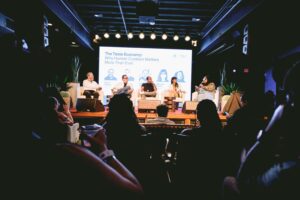
Their urgency around AI is understandable — and wise. At the Leading with AI conference held in San Francisco in February, Stanford University economist Nicholas Bloom, an expert on the future of work and economic uncertainty, told the audience that AI’s impact on productivity is “potentially a once-in-a-century-type thing.”
But there is another set of skills that many argue is even more important to our success: human ones. “Each of us have to better understand how we use technology, but I think we are in a really pivotal moment,” Jessica Swank, chief people officer at Box, a tech-driven content management company, said at the AI conference. “What I’m seeing is that human skills and ability to collaborate — to have that judgment, the discernment — is more important than ever.”
Similarly, neuroscientist and AI expert Vivienne Ming argues that human skills, including empathy, curiosity, and the ability to ask the right strategic questions, are what will allow us to flourish in the future. “The way to robot-proof yourself is to become more human,” she writes in her new book, Robot-Proof: When Machines Have All the Answers, Build Better People.
That points to another finding from recent research that underscores something event professionals understand instinctively: bringing people together strengthens the human capacities — including empathy and trust — that technology alone cannot create. Like event professionals surveyed in the “PCMA 2026 Outlook” report, respondents to PCMA’s 2026 EMEA Engagement Survey chose AI proficiency as the top skill they want to develop. But when asked about their organization’s top priority, the most popular answer was connection — building and maintaining relationships.
Helping forge those connections and relationships — between ideas and people from a diversity of backgrounds — remains at the heart of what we do. And it is what will allow us to continue responding to the many challenges we face now and in the future.
The Food-Waste Connection
For the cover story, “Coming to the Table,” Senior Editor Jennifer N. Dienst talked to business event strategists and business event partners about the enormous problem of food waste at events. New research makes the case for the best way to help cut down on the millions of tons of food that goes uneaten at events — and it doesn’t rely on a shiny new app or complicated technology. Instead, the best approach speaks to what makes the business events industry tick: strong collaboration between venues and business event strategists throughout the full lifecycle of events.
Author

About The Author